
Pluralities Nonfiction Film Conference
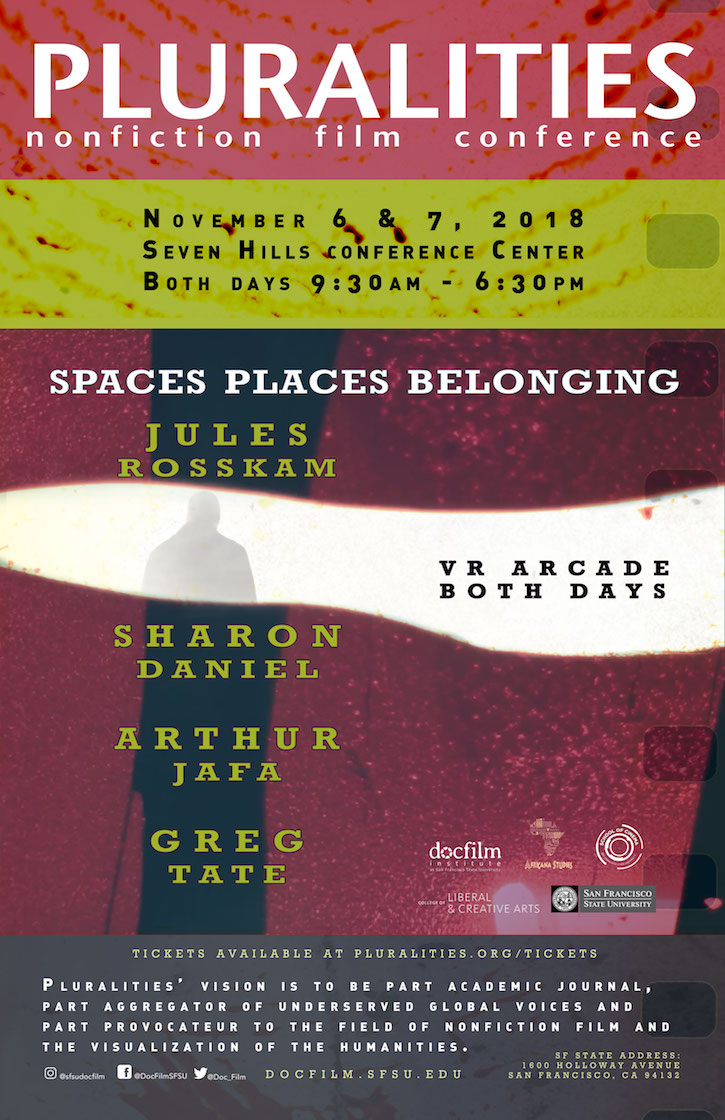 The Pluralities Nonfiction Film conference, hosted by the Documentary Fim Institute, San Francisco State University, took place on Nov. 6th and 7th. The theme was: Spaces, Places, Belonging, which was a great opportunity to present on my current documentary and research project in progress, including some new interview footage shot in the North Country. I was honored to present in the company of Laura Chipley (SUNY College, Old Westbury) and Samara Smith (SUNY College, Old Westbury) on a panel called Documenting Place: Collective Storytelling, Community Engagement and Documentary Practice. The keynote speakers, films and range of concerns touched upon throughout the two days were all inspiring. Thank you to Soumyaa Behrens for organizing such a thoughtful program.
More on the conference:
At our 2018 conference we hope to address themes such as spaces, places and belonging, not limited to, public space, space of the real, access to spaces (literal and figurative), relationship of race and gender to space, exhibition spaces, virtual spaces, funding spaces, accessibility, space of social platforms, boundaries and borders, conflict over borders, expanding boundaries, globalism versus nationalism, are some spaces only for some people, safe spaces, patrolled spaces, surveillance, should all spaces be diversified, should we have communities that only allow certain people access?
Jules Rosskam will present the day one keynote, Borders, Boundaries, and Bodies, or How I Got To Be Here: Jules Rosskam, screen his newest film, Paternal Rites and give workshops during the conference, while interactive and participatory media artist Sharon Daniel will present the day two keynote, The Evolution of “Public Secrets.” We are excited to also host artist, video maker and cinematographer Arthur Jafa in conversation with musician, producer and artist Greg Tate.
To close out the conference we will be screening the documentary, Survivors. Member from the Survivors team will be present for a Q&A following the film. “Through the eyes of Sierra Leonean filmmakers, Survivors presents a heart-connected portrait of their country during the Ebola outbreak, exposing the complexity of the epidemic and the socio-political turmoil that lies in its wake.”
Borderland Rivers Watercolor Bibliography
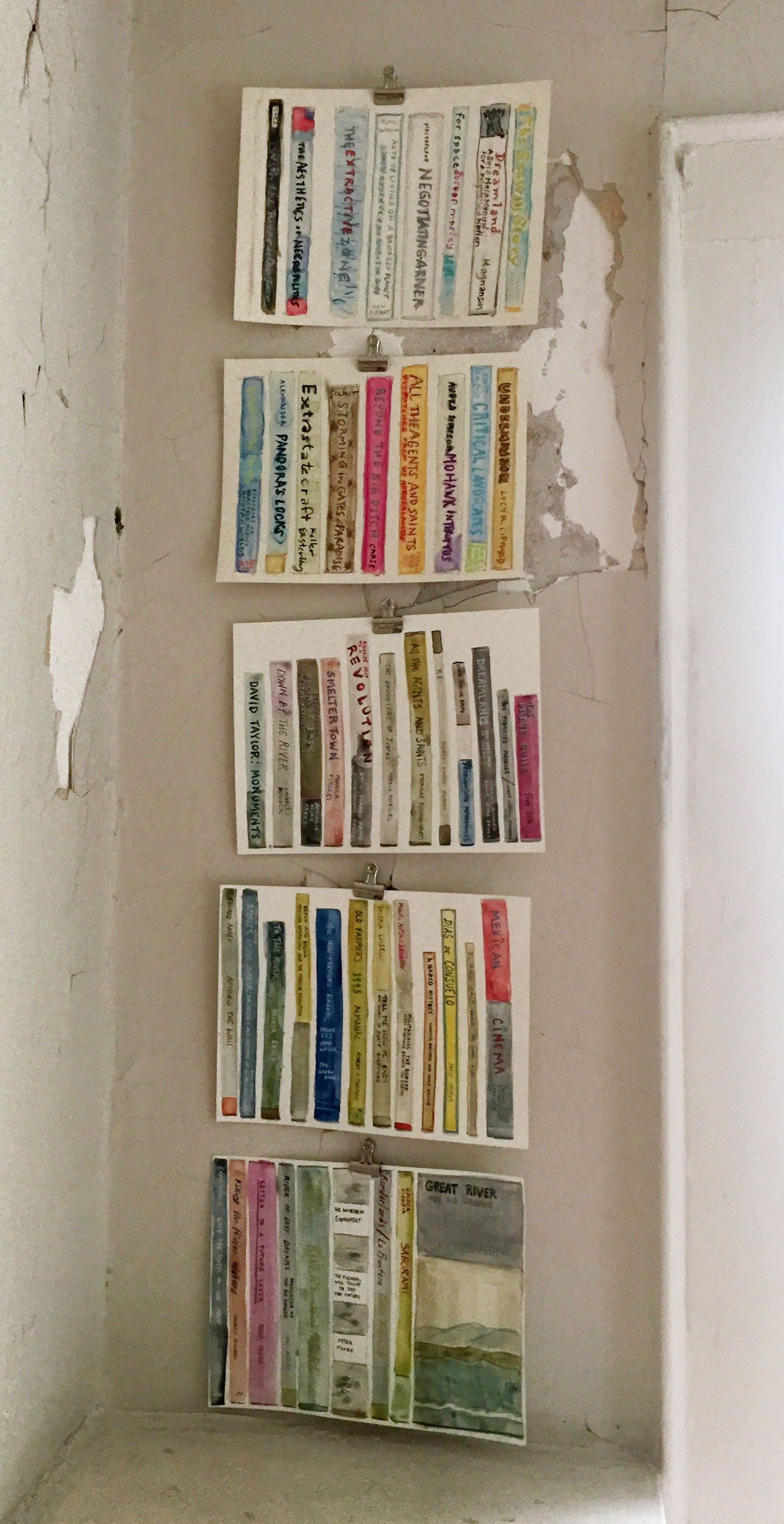
One of the magical synchronicities of the Works on Water / Underwater New York residency was that my studio was across the hall from Nicole Antebi’s. We were both on the top floor with our doors facing one another. It wasn’t long before we discovered that both our research and projects were focused on a river that articulates an international border of the United States—hers, the Rio Grande bordering Mexico, and mine the St. Lawrence River, bordering Canada. We are both interested in complexities, social and ecological justice issues, ideas around belonging… We shared our bibliographies and Nicole initiated a collaboration in which we each made watercolor images of our books. We hung our north and south oriented watercolor book spines in the library in the public area of the residency house on the first floor.
Nicole makes wonderful animations and recently published a great interview with historian David Dorado Romo about the fight to preserve the oldest barrio in El Paso. It is featured here on Longreads: The City I Love Is Destroying Itself.
Works on Water / Underwater New York residency on Governor’s Island
For four weeks in July and August I was in residence again on Governors Island, this time with Works on Water and Underwater New York. I had a studio with artfully peeling walls on the top floor of one of the old officer’s houses in Nolan Park. For the first two weeks I was in residence with Meredith Drum as half of our Oyster City collaboration. For the last two weeks I worked on my Place of the Big River research and film project and edited an “extended trailer” for Survivalist Cinema. The trailer was made from clips borrowed from 1970s ecological disaster and survivalist films that I process with analog signal processing tools in January at the Signal Culture residency.
The community of artists (51 residents in total over the summerand fall!) working with and on water that the residency brought together is impressive and “buoying”. I am grateful for and impressed by the generosity of all the organizers for making it happen and for their generative, collaborative spirit.
Mediated Natures panel at ISEA Durban
This month I had the privilege of traveling to Durban, South Africa to present on a panel at ISEA (International Symposium on Electronic Arts) with some very inspiring artists and academics. Our panel was called Mediated Natures, Speculative Futures and Justice and was organized by Meredith Drum and Margaretha Haughwout. The panel took place over two sessions. The first included: Cesar Baio + Lucy HG Solomon, Grisha Coleman and Meredith Drum. The second included: Tyler Fox, Magaretha Haughwout, Simone Paterson and Rachel Stevens (me). I presented research in progress—I am looking at the site of the St Lawrence River where it acts as a border between Canada and the US and bisects the Akwesasne Mohawk territory. The site is home to the St. Lawrence Seaway Eisenhower Lock and Moses-Saunders Hydropower Dam, three superfund sites created by General Motors and Alcoa Aluminum, and a host of invasive and migrating species—a rich site for entangled existences. I haven’t landed on a form for the project, likely to be experimental documentary, and I haven’t yet found my “radical aesthetics,” but in the meantime, the presentation is called:
Place of the Big River (Kaniatarowanénhne)
Infrastructure, Waterways and Alien Others: Technologies of Collaboration through Contamination
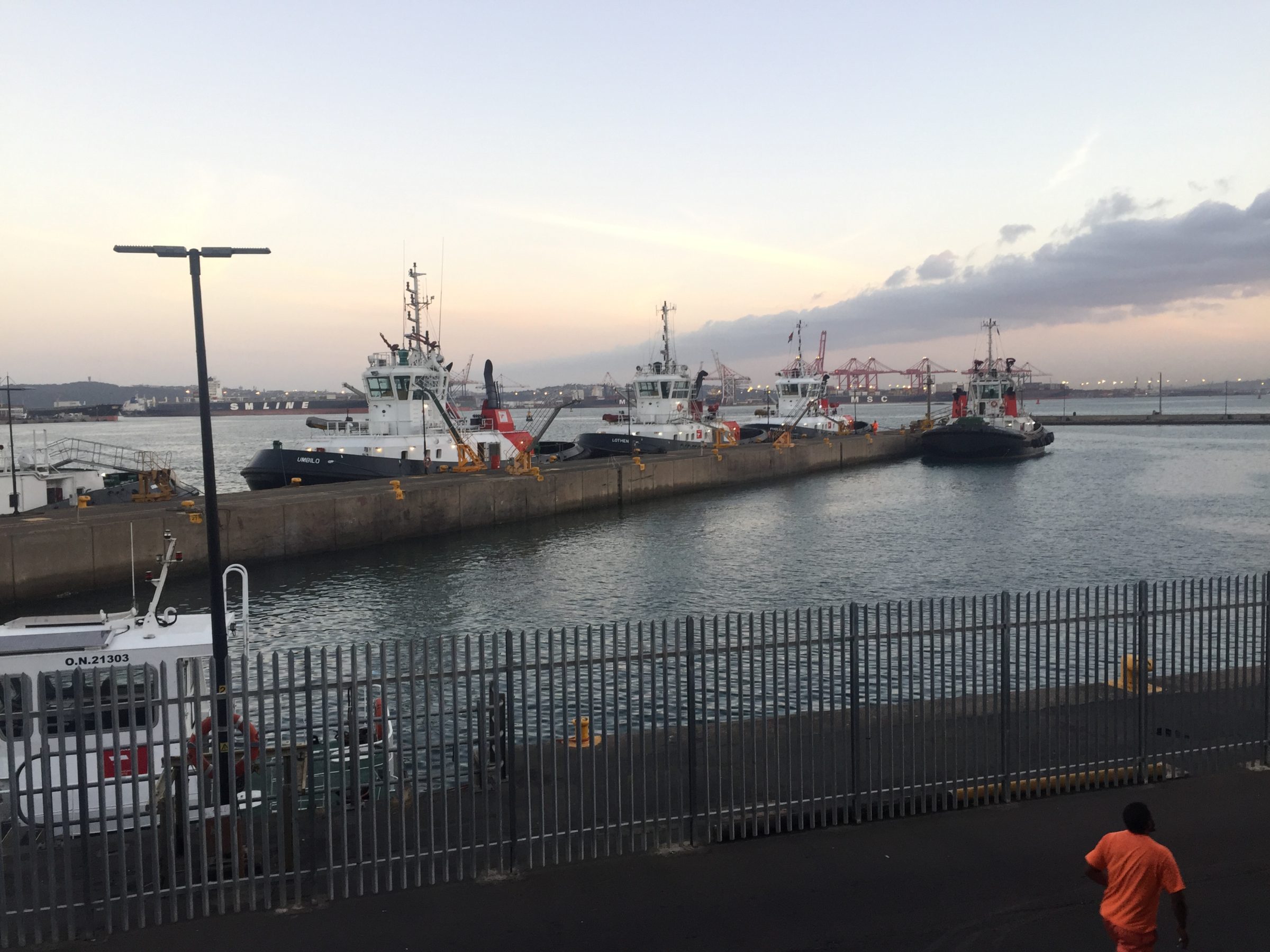
Of course, there were so many great projects and people at ISEA and in Durban to get to know. Visiting South Africa for the first time was a gift. Pieces of the continent started to become more distinct and legible to me and sociopolitical complexities articulated in real time. Durban is a busy seaport town and used to be a major hub in the sugar trade. Born a Crime by Trevor Noah, his autobiography about growing up biracial under Apartheid, was recommended and now on my list.
 .
.
Port of Durban
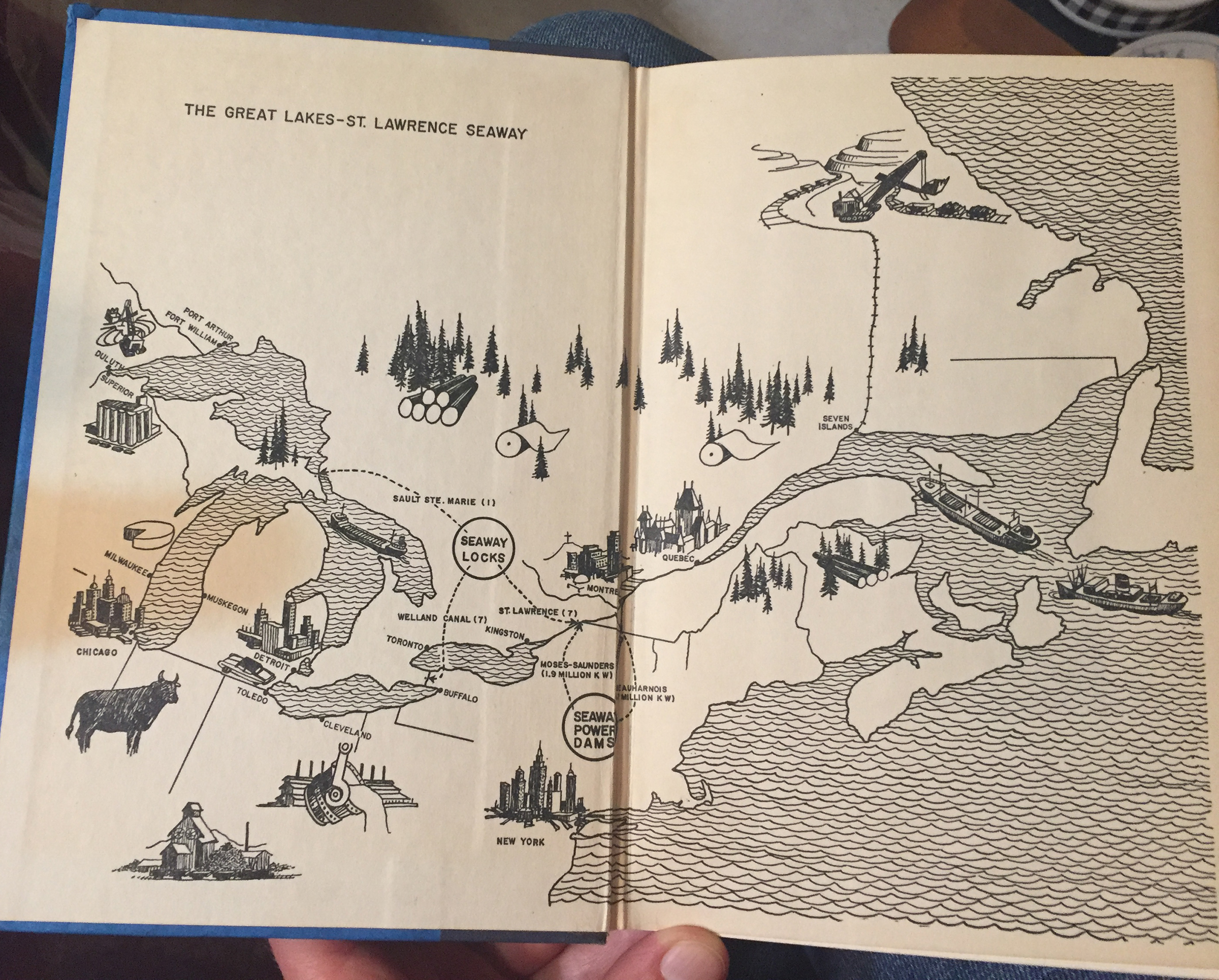
Map of the St. Lawrence Seaway
Resilience for All book
Fish Stories Community Cookbook, the project I did in collaboration with Meredith Drum as part of Paths to Pier 42 – focusing on the Lower East Side and the East River Waterfront – is mentioned in this great new book. Our project is discussed in “Chapter 4: Lower East Side, Manhattan: Tactical Urbanism Holding Space for the People’s Waterfront.” Thank you Barbara Brown Wilson for writing such a relevant book.
